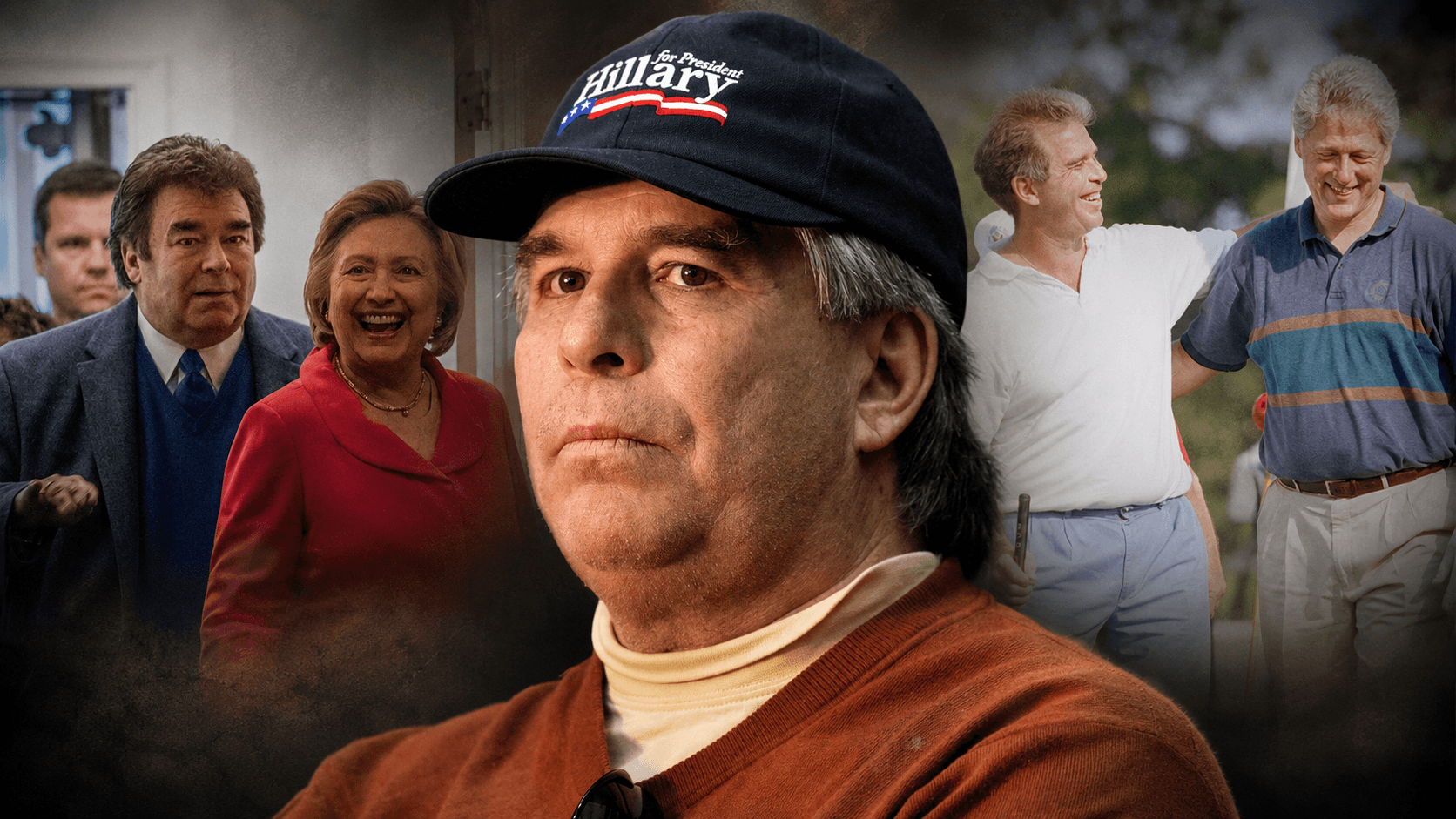
For decades, the Clinton family’s orbit of relatives, donors, and hangers-on has generated a steady stream of ethical questions that somehow always seemed to evaporate before facing real consequences. Newly released FBI records, obtained through a Freedom of Information Act lawsuit filed by the government watchdog group Judicial Watch, reveal that Hillary Clinton’s late brother, Anthony “Tony” Rodham, was the subject of a criminal investigation into wire and mail fraud back in 1996, during the very heart of Bill Clinton’s reelection campaign.

Judicial Watch announced it had received 77 pages of heavily redacted FBI records tied to the investigation, records the bureau sat on for more than two decades despite a FOIA request first filed back in June 2019, just days after Rodham’s death. The watchdog group argued that with Rodham deceased, there was no longer any legitimate justification for the FBI to continue withholding records related to any pending investigation, since his death would have effectively closed the matter. The bureau nonetheless failed to respond, forcing Judicial Watch to file a formal lawsuit in December 2025 to finally pry the documents loose.

The records show that in April 1996, the FBI’s Miami Field Office opened a formal investigation into Rodham under the case title “Anthony D. Rodham,” assigned case number 196D-MM-79121. Astute observers of FBI case numbering conventions will recognize the significance of that “196” designation, which specifically denotes an investigation into wire fraud. This was not some minor administrative inquiry. It was a criminal fraud investigation opened against the brother of the sitting First Lady, at the exact moment her husband was seeking a second term in the White House.

According to the documents, the investigation centered on a business venture Rodham launched in the summer of 1996 called East European Imports, Incorporated, operating out of corporate offices in Coral Gables, Florida. Rodham and his business partners claimed to hold exclusive rights to import and sell two models of a Romanian made four wheel drive vehicle known as the ARO into the United States market. The company then proceeded to solicit deposits and fees from prospective auto dealers across the country, reportedly demanding close to 70,000 dollars apiece from dealerships eager to secure the rights to sell these vehicles.

The trouble, according to the FBI’s own investigative notes, was that serious questions arose over whether East European Imports ever actually held a legitimate contract with the Romanian government or with the Romanian manufacturer to import the vehicles in the first place. Despite collecting substantial deposits from dealers around the country, the company never actually imported a single ARO vehicle into the United States. That is the textbook definition of the kind of scheme federal wire fraud statutes were written to address.

What makes this case particularly striking is a line buried directly in the FBI’s own paperwork. One document plainly states that the investigation had assumed sensitive political aspects specifically because investigators determined that Anthony “Tony” Rodham, brother of Hillary Rodham Clinton, may have played a role in securing the alleged importation rights on behalf of the company. In other words, the FBI itself recognized at the time that this was no ordinary fraud case. It involved a direct relative of the First Lady, and agents handled it with the kind of political sensitivity that raises obvious questions about whether the investigation was ever allowed to proceed on its natural course or was quietly managed to avoid embarrassing the Clinton White House during an election year.

Judicial Watch President Tom Fitton did not hold back in his assessment of the newly uncovered material. After more than two decades of stonewalling, he said, these records reveal a genuine criminal investigation involving Hillary Clinton’s brother and raise serious questions about what else remains buried in government files, not just about Rodham, but about Hillary Clinton herself. Given that the FBI acknowledged back in 2019 that it held more than 13,000 pages of records and media files related to Rodham, Fitton’s suspicion that the public record barely scratches the surface seems entirely reasonable.

This is far from the first time Tony Rodham’s business dealings have drawn scrutiny. Throughout his adult life, Rodham cultivated a reputation as a self-described “facilitator,” someone who leveraged his family connection to the Clintons to open doors in business ventures that ordinary private citizens simply would not have access to. He addressed Chinese investor conferences trading on the Clinton name and at one point sat on the advisory board of a company seeking permission to mine for gold in earthquake-ravaged Haiti, a country where the Clinton family’s charitable and business interests have long overlapped in ways that outside watchdogs have struggled to fully untangle.

Rodham also pursued a proposed 22 million dollar post-earthquake housing deal in Haiti at a time when Bill Clinton was co-chairing the official recovery commission overseeing the international relief effort there. That particular proposal ultimately collapsed, but the fact that Rodham was in position to pursue it at all speaks volumes about how the family’s political influence translated into business opportunities that had nothing to do with merit or expertise.

Perhaps most notoriously, Rodham partnered with former Virginia Governor Terry McAuliffe, a longtime Clinton fundraising bundler, on a venture called GreenTech Automotive. The company became entangled in controversy over its use of the federal EB-5 visa program, which allows wealthy foreign investors to essentially purchase green cards in exchange for investment in American businesses. Rodham and McAuliffe raised at least 46 million dollars from Chinese investors under this arrangement, all while Hillary Clinton served as secretary of state, overseeing the very department with authority over the visa program in question. GreenTech ultimately filed for bankruptcy in February 2018, roughly a year after Hillary Clinton’s own failed presidential bid.

Emails previously uncovered by Judicial Watch through separate FOIA requests further illustrate the pattern of Rodham leveraging his family ties for personal benefit. In one exchange from January 2010, Clinton’s confidential assistant Monica Hanley forwarded a request from Rodham to deputy chief of staff Huma Abedin covering three separate favors, including help with a green card renewal, a request regarding a visit from an unnamed individual that Abedin apparently regretted agreeing to, and a job placement request for someone whose resume Rodham had personally forwarded to the State Department.

Other previously released records show Rodham acting as a go-between for Clinton Foundation donor Richard Park, funneling requests through Abedin’s private email account rather than official government channels, a pattern that mirrors broader concerns raised for years about the blurred lines between the Clinton Foundation’s charitable mission and the Clinton family’s personal and political interests.

Those same records revealed Clinton Foundation executive Doug Band instructing Abedin to show special favor to Clinton Foundation donor Andrew Liveris, further underscoring how deeply intertwined the family’s charitable, business, and political dealings had become during Hillary Clinton’s tenure at the State Department.

The timing of this latest revelation is notable given current political dynamics. Hillary Clinton has recently reinserted herself into national headlines, calling on federal employees within the intelligence community to resist cooperating with acting Director of National Intelligence Bill Pulte as he works to declassify a range of intelligence materials under authority granted by President Trump. Even CNN commentary at the time noted that Clinton’s remarks carried an unmistakable “deep state” flavor, given her insistence that career officials should potentially defy lawful directives from their superiors.