
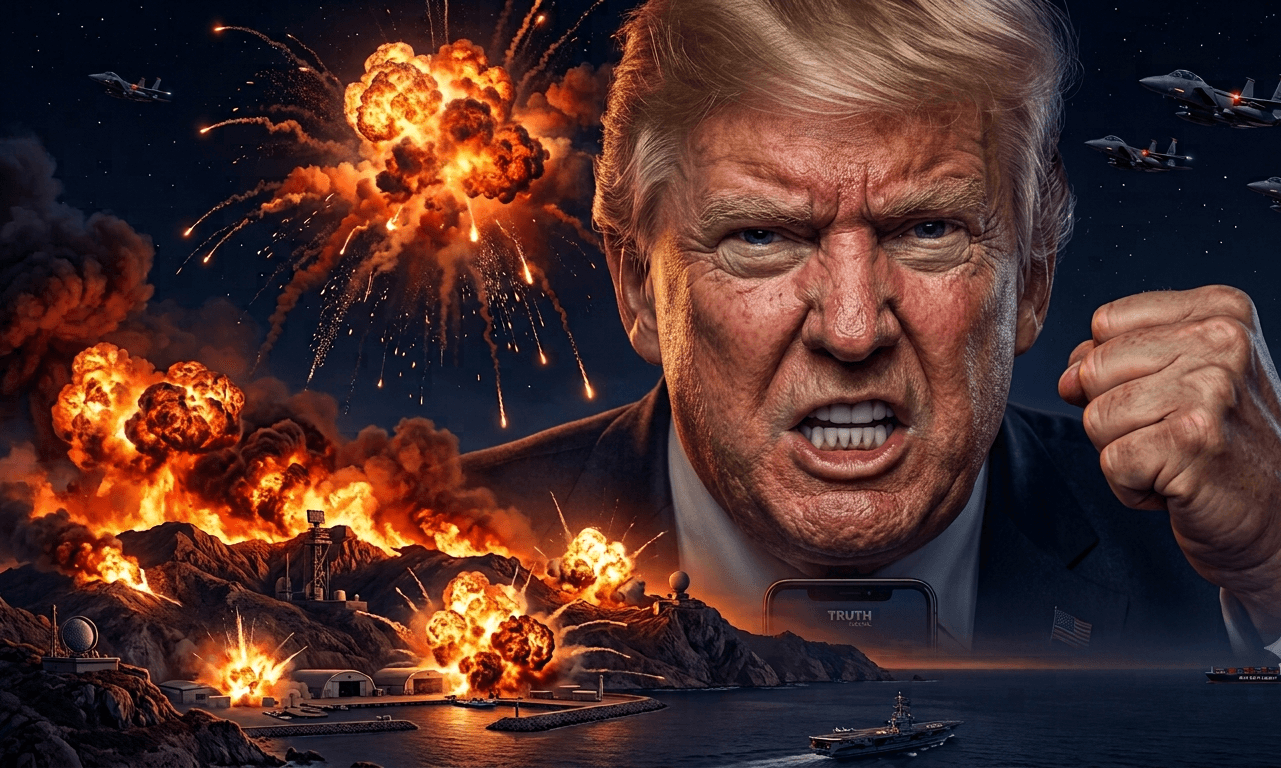
Tensions between the United States and Iran have erupted once again after the US Air Force launched airstrikes targeting Iranian missile storage facilities, drone sites, and radar systems on Friday, June 26, 2026.

Asian Dot

President Trump labeled Iran’s actions "foolish," while US military commanders warned they undermine international freedom of navigation

The decision to carry out retaliatory strikes came immediately after a drone attack targeted a commercial cargo ship transiting the Strait of Hormuz—one of the world's most critical maritime choke points for global trade. US President Donald Trump condemned Iran's actions, calling it a severe violation of the recently established ceasefire agreement.

Iran stands accused of deploying at least four drones targeting commercial vessels in the area. Writing on his social media platform, Truth Social, President Trump noted that while one drone successfully struck the upper section of the cargo vessel, the remaining three were successfully intercepted and shot down by US forces. The targeted vessel, identified as the M/V Ever Lovely, is a Singapore-flagged cargo ship that was exiting the Strait of Hormuz near the coast of Oman at the time of the incident.

Violation of the Ceasefire Agreement

Asian DotThe struck vessel did not sustain catastrophic damage and is not in danger of sinking

The struck vessel did not sustain catastrophic damage and is not in danger of sinking

The drone attack sparked intense fury from the US administration, given that the ceasefire agreement between the two nations had been signed just last week. Under the terms of the 60-day pact, the Strait of Hormuz—which facilitates the passage of up to 20% of the world's petroleum supply—was explicitly required to remain open, allowing safe and fee-free transit for all commercial vessels.

President Trump labeled Iran’s actions as "foolish," while US military commanders emphasized that Iran's dangerous behavior directly undermines the freedom of navigation in international waters.

Statement from the Shipowner: The struck vessel did not sustain catastrophic damage and is not in danger of sinking. Evergreen Marine, the owner of the vessel, confirmed that the damage was limited to shattered windows in the bridge command room. Furthermore, no crew members were injured, and the cargo remains entirely secure. The ship's engines and navigation systems remain fully operational, allowing it to continue its voyage.

When reporters at the White House pressed President Trump on what consequences Iran would face for breaking the agreement, he responded shortly and firmly: "You'll see."

History of Conflict in the Strait of Hormuz

The Strait of Hormuz has long been a geopolitical flashpoint, with Iran frequently attempting to exert control over the waterway to leverage its position in international negotiations. Conversely, the US and the broader international community have consistently maintained that the strait must remain an open, free-access waterway.

To mitigate the risk of direct confrontations, the United Nations maritime agency, the International Maritime Organization (IMO), previously established an alternative shipping lane. This route routes traffic further away from Iranian territory, directing ships along the coastal waters of the United Arab Emirates and Oman instead. However, Tehran has previously issued warnings stating it would not guarantee the safety of any vessels that fail to follow its own designated shipping lanes.