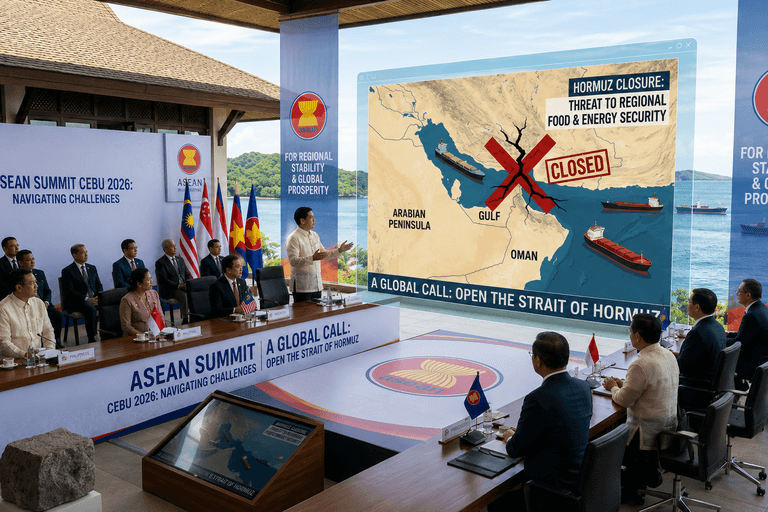

During the ASEAN Summit currently being held in Cebu, Philippines, ASEAN leaders expressed deep concern regarding the closure of the Strait of Hormuz resulting from the conflict between the United States and Iran. This disruption not only impacts global oil price stability but is also becoming a severe threat to regional food security.
According to Ferdinand Marcos Jr., President of the Philippines and current ASEAN Chair, this strait is a vital economic artery, carrying approximately one-third of the world’s agricultural fertilizer supply.
-2.png&w=3840&q=75)
The World Bank forecasts a price surge of fertilizer up to 31% within this year, 2026
Key Impacts Currently Unfolding:
- Fertilizer Prices: The World Bank forecasts a price surge of up to 31% within this year, 2026.
- Food Security: Shortages in agricultural inputs are driving up commodity prices and causing food scarcity across the region.
- Natural Phenomena: The ongoing effects of El Niño are putting additional pressure on existing agricultural yields.
In response to this crisis, ASEAN leaders are discussing the establishment of a joint "Strategic Food Reserve." This mechanism would allow member states to stockpile food—particularly rice—to assist one another during emergencies. Although the APTERR mechanism (with China, Japan, and South Korea) has been in place since 2011, the current situation demands even deeper cooperation to ensure the region's population does not face a hunger crisis.
.png&w=3840&q=75)
the APTERR mechanism (with China, Japan, and South Korea) since 2011