
The Chinese Ministry of Foreign Affairs on Friday, June 12, officially confirmed the arrest of Mr. Min Zin, a U.S. citizen and the head of a research institute focusing on Myanmar affairs, alleging that he is suspected of espionage or engaging in activities that threaten China's national security.
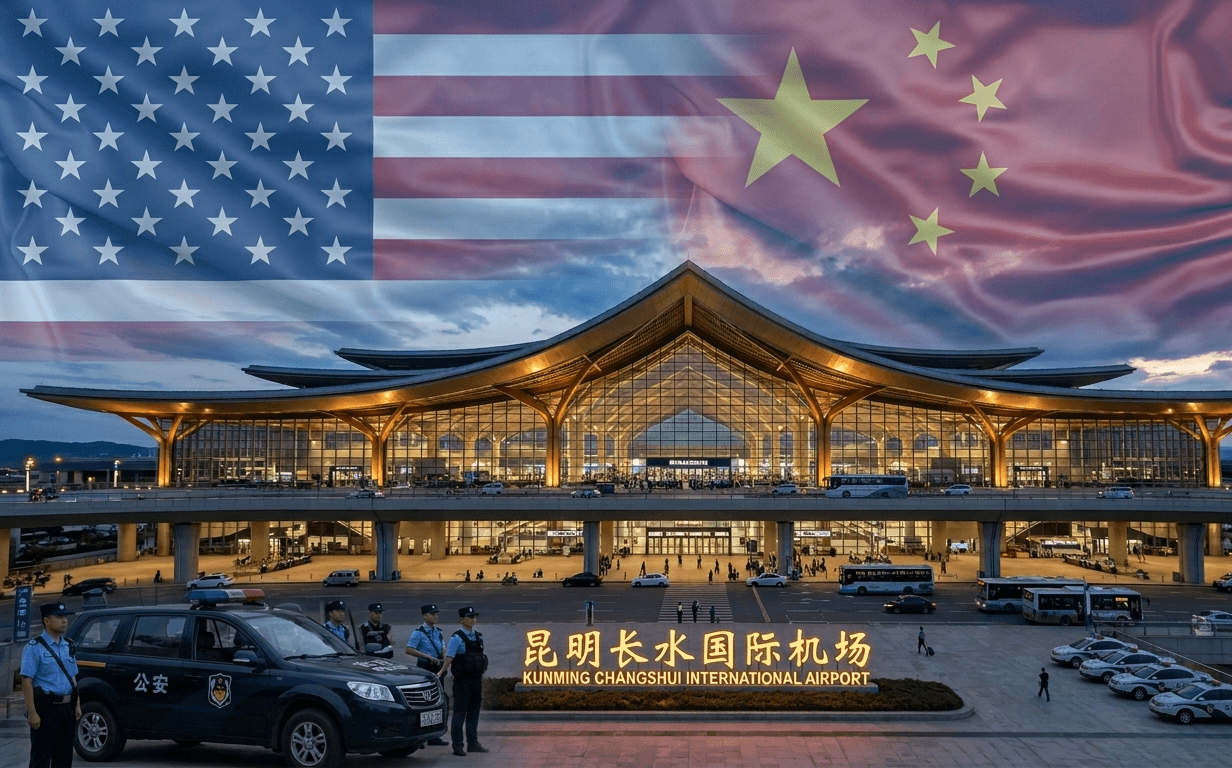
The Chinese Foreign Ministry confirmed the arrest of Min Zin, executive director of ISP-Myanmar, at Kunming airport
During a press conference, Lin Jian, spokesperson for the Chinese Foreign Ministry, stated that relevant authorities legally detained Mr. Min Zin under suspicion of involvement in espionage activities that harm China's national security. He added that the Chinese side has already notified the U.S. Consulate General in Guangzhou, southern China, regarding the arrest. According to sources close to the matter, Mr. Min Zin, who serves as the executive director of the Institute for Strategy and Policy-Myanmar (ISP-Myanmar), was immediately detained by authorities at the airport in Kunming, southwestern China, two weeks ago upon his arrival.
The arrest of this U.S. citizen comes at a time when the United States and China are attempting to manage and stabilize their strained bilateral relations, following U.S. President Donald Trump's visit to Beijing last month.
Brief Profile of Mr. Min Zin
- Background: A former student activist who participated in Myanmar's 1988 pro-democracy movement.
- Education: Graduated with a degree in Political Science from the University of California, Berkeley, in the United States.
- Establishment of the Institute: A co-founder of ISP-Myanmar, which was originally based in Myanmar but was forced to relocate abroad following the 2021 military coup that ousted the democratically elected government of Aung San Suu Kyi.
That crisis plunged Myanmar into a prolonged civil war between the military junta and pro-democracy armed groups, as well as ethnic armed organizations—a critical topic closely monitored by Mr. Min Zin's institute.
The institute's latest publication focused heavily on the political transitions in Myanmar after military regime leader Min Aung Hlaing assumed the presidency through a military-organized election, alongside the collapse of the national economy. Notably, China has publicly backed Myanmar's new government, despite the election facing harsh international criticism for excluding major opposition groups, including Aung San Suu Kyi's party.