
The geopolitical landscape has shifted dramatically following a series of high-profile assassinations in Iran involving top leaders. These events, orchestrated via precision airstrikes by the U.S. and Israel, have reportedly caused North Korean leader Kim Jong Un to become deeply concerned about his personal safety. In response, Pyongyang has moved to amend its constitution to ensure "automatic" nuclear retaliation, even in the event of the leader's death.
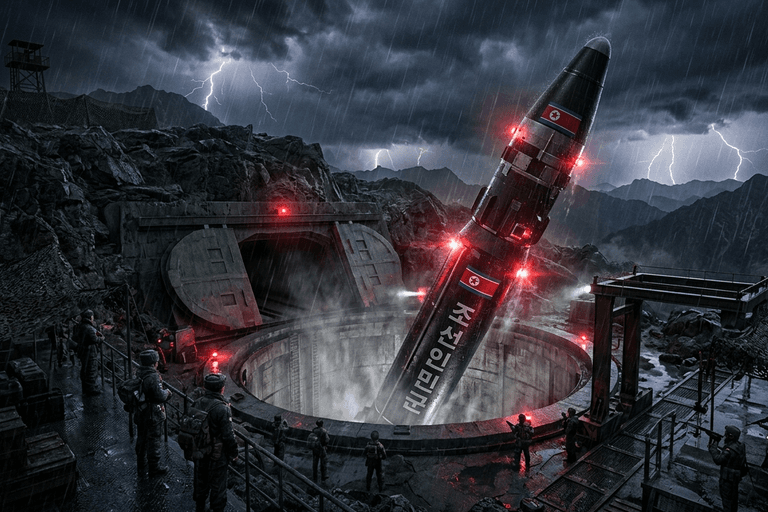
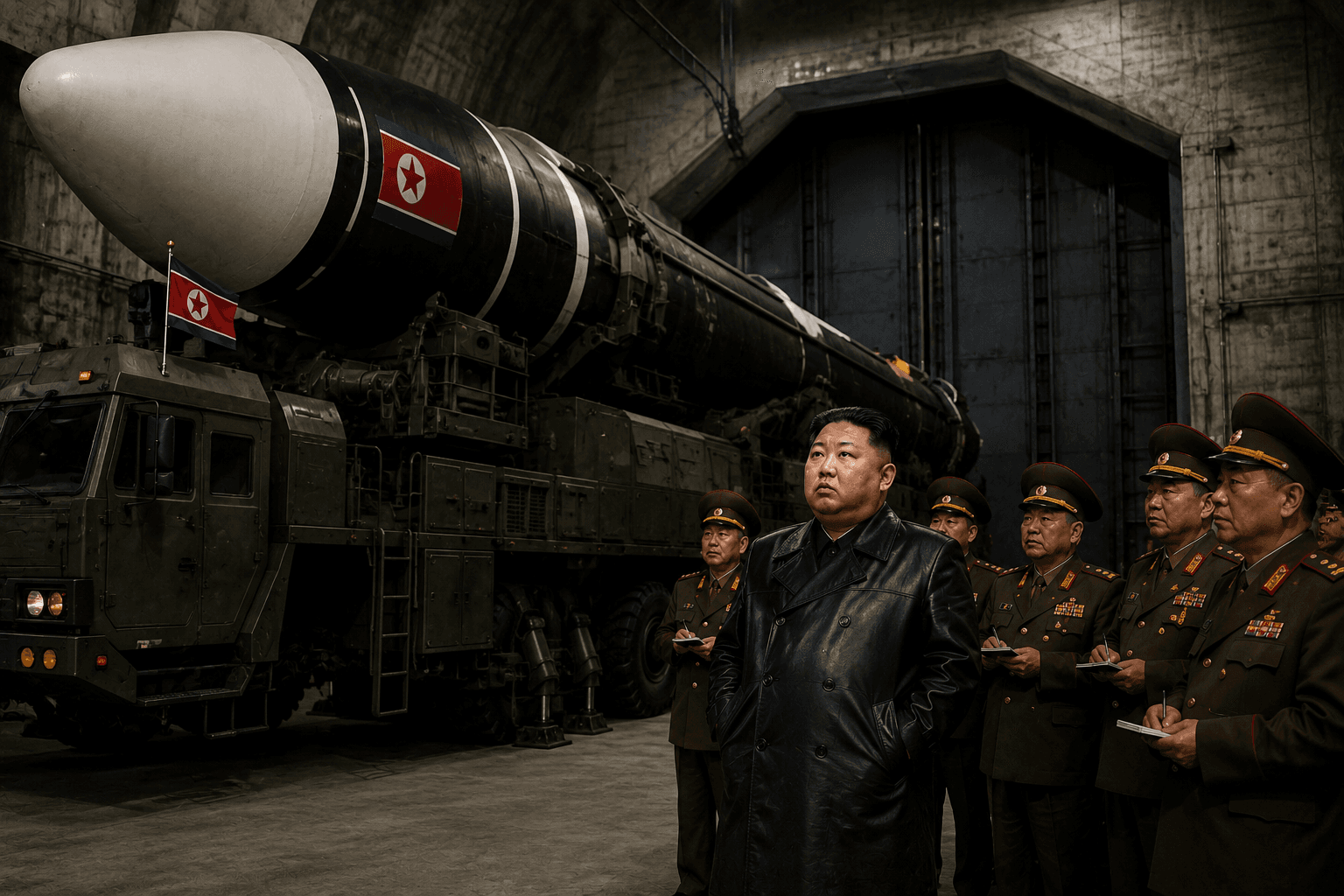
North Korean nuclear missile emerging from a hidden mountain silo during a dark
According to South Korean intelligence reports published by The Telegraph on May 8, 2026, North Korea’s new legal framework dictates that if the national nuclear command system is endangered or if Kim Jong Un is assassinated, the military is mandated to launch a nuclear strike immediately. This "Dead Hand" system ensures that even if the leadership is decapitated, the adversary will face total destruction.
Experts from Seoul National University suggest this move highlights Pyongyang's fear of advanced U.S. satellite surveillance and drone technology. While Kim Jong Un remains highly guarded—traveling primarily via armored train—he recognizes that his personal survival is synonymous with the survival of the regime. Unlike other nations, North Korea’s isolation makes infiltration or digital espionage nearly impossible, yet the fear of "decapitation strikes" remains a driving force for their military policy
Kim Jong Un has intensified conventional military pressure. During recent inspections of arms factories, he ordered the deployment of new long-range artillery along the South Korean border
In addition to the nuclear threat, Kim Jong Un has intensified conventional military pressure. During recent inspections of arms factories, he ordered the deployment of new long-range artillery along the South Korean border. These weapons have a range exceeding 60km, placing the entire city of Seoul and vital industrial hubs within direct striking distance. As of 2026, the two Koreas technically remain at war, as no formal peace treaty has been signed since the 1950s conflict.